

hungry hungry homes
the call is coming from inside the house
for the best reading experience click the post’s title above to open in a new page which allows you to hover over the numbered footnotes to read them alongside the text. its one click. JUST DO IT.
the rolling ladder is a weekly ritual that brings you amusement or adds a new book to your nightstand then
read a book! - heart! - share! - comment! - or even buy me a ‘coffee’
Do YOU have an idea for a guest shelf? Comment and let me know!
While I’ve lived in a variety of homes over the years, none of them had truly dark vibes. Well, I suppose the ‘castle house’ in New Jersey had a little bit of a bloody episode. One day my mother screeched at the sight of her two adorable daughters1 walking into the kitchen because we were covered head to toe in a fine splatter of tiny red dots. We had been in the backyard watching our landlord chop the heads off her chickens, laughing as the headless bodies ran around maniacally. I wonder if I’m scarred from this?
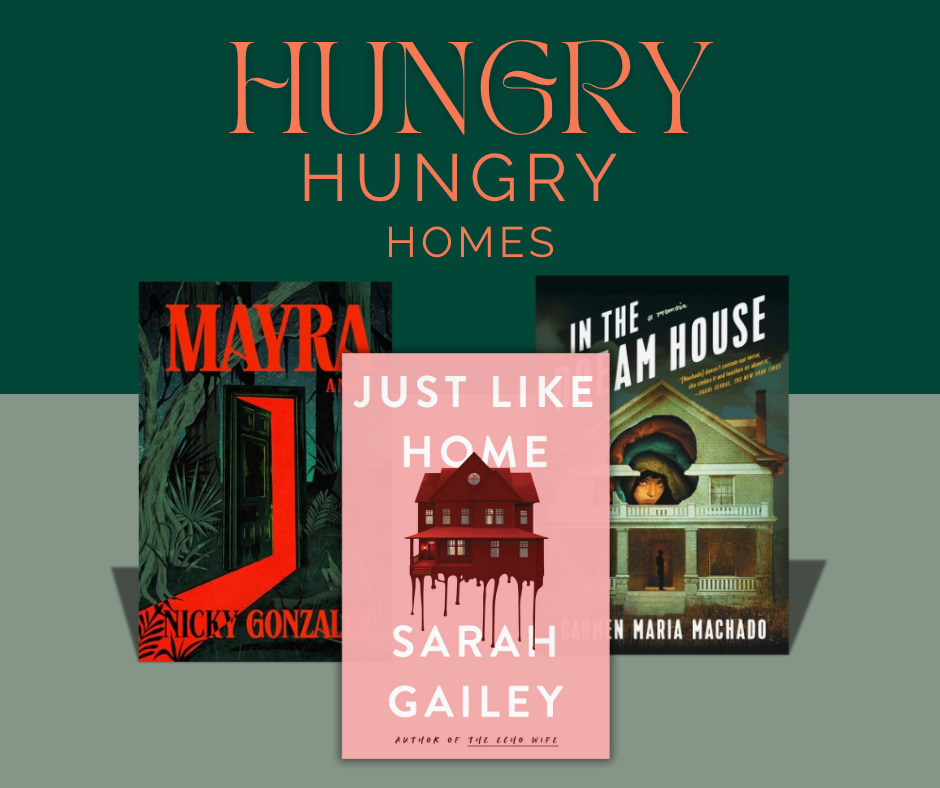
While I’ve avoided hungry homes so far, I can see how a house could soak up the energy of its history and inhabitants. How it could create, then feed off of a sense of growing unease to eventually become inhospitable. A unique, sickly sense of horror blooms when a place that should provide shelter and rest turns against its occupants and sucks their sense, safety and selfhood from them. Perhaps its wallpaper absorbs sanity, or its floorboards crave blood or the walls whisper and snare. Today’s shelf contains a southern gothic about a house that steals time, memories and identity, a horror set in an old family home where bodies may still be buried and a memoir about a dream house where one resident feasts upon the other.
Open the curtains, turn on all the lights and keep the basement door firmly barricaded as you try to find shelter with one of these.
MAYRA by Nicky Gonzalez
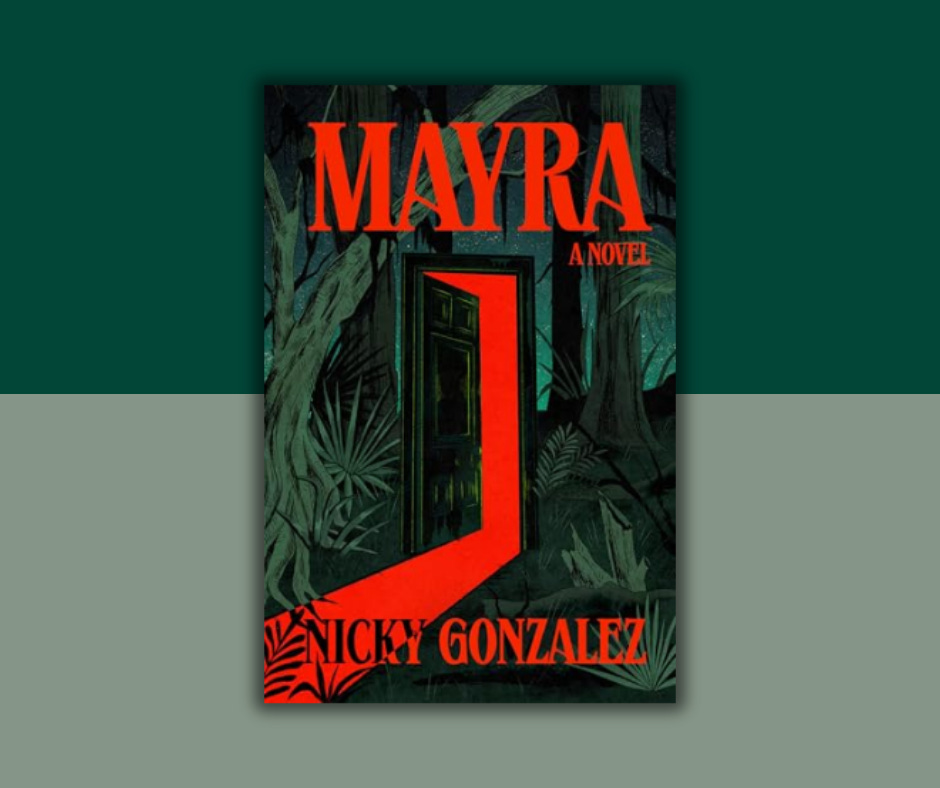
Ingrid has felt anxious, bored and stuck for years in her hometown of Hileah, a Cuban suburb of Miami. When her estranged childhood friend Mayra calls out of the blue to invite her to visit her in the Everglades she squashes the sense of foreboding that arises and decides to go. When she arrives at the dark, sprawling house in the middle of a swamp she and Mayra pick their friendship right back up, despite a constantly hovering third wheel in Mayra’s odd but devoted boyfriend Benji. Though unsettled by the mysterious marsh mansion, Ingrid gets swept up reconnecting and reminiscing over languid meals, wetland hikes and inside jokes. But when time seems to slow and memories disappear, the women revert back into old dynamics and are in danger of becoming trapped by more than just the past.
I enjoyed the setting of this Southern Gothic as I hadn’t read one set in the wetlands before. A bog was an ideal setting for this eerie story with its slowly unfurling fog, oppressive heat and unsettling flora. Even as Ingrid starts her journey to the house we grow ill at ease because of the land itself— its damp, stickiness clings and literally sucks things into its murky depths.
This immediately grabbed my attention and was quite spooky, though it doesn’t reach graphic horror territory. It has some fun psychological scares as we witness Ingrid stumble along, oblivious to losing time and her memories. Her struggle is relatable as her ordinary, unambitious and anxious nature has meant she felt ‘chosen’ by Cool Girl Mayra in school and so was always in her shadow. Mayra is everything Ingrid is not and this creates a desperate hunger in Ingrid, one that this house reflects and warps. This felt quirky, unique and enjoyably uncanny though could sometimes get confusing. I would have liked the weirdness to ramp up more consistently to build a constant tension and its pacing could have been tighter, but this was an overall fun ride with some great, relatable character dynamics at play.
We lounged and danced and ate and gossiped. In the evening, we watched the creamsicle sky become one great ember as the insects started up their song. I stayed one more night and then another. Periodically, I felt I had somewhere to be, but when I thought hard about it, I couldn’t come up with anything. It was the same feeling one gets when asked what they did during the long weekend, and upon reflection finds the stretch of days completely unaccounted for. Nothing, one might say, though that’s impossible.
Did you know I do more than read and tell you what to read? I also edit podcasts and fiction. If you’ve got an audio project that needs a skilled ear or a fiction manuscript that needs a detailed eye, send me a message, or leave me a comment.
JUST LIKE HOME by Sarah Gailey
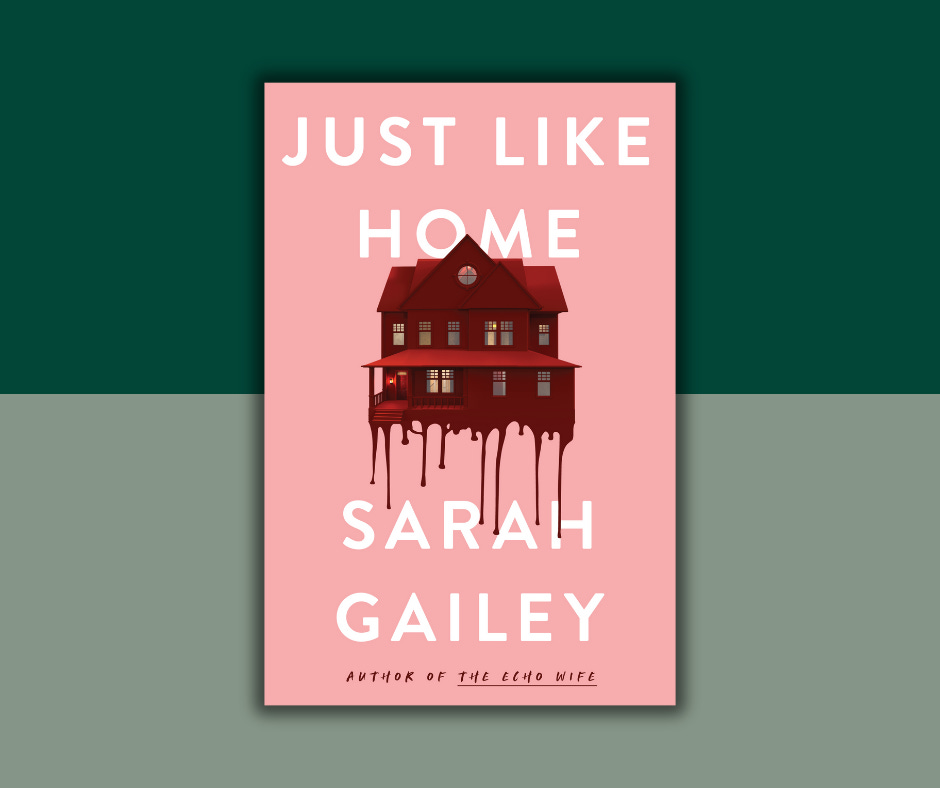
Vera has been called back to the home she was kicked out of decades earlier. A home that was built, and made notorious, by her father, a convicted serial killer. Now her dying mother requests her presence to pack things up and say her goodbyes. As she wrestles with the memories and mysteries of the house, she must also deal with her mother’s rapidly deteriorating state and the current guest house tenant— a shifty ‘spiritual rendering artist’ who has his own plans for her childhood home. As shadows refuse to dissipate, as claw like gouges appear in the walls and as torn pages from her father’s missing journal turn up in unlikely places, Vera must find a way to pair the stubborn love she has for her father with the darkness she feels building inside her home and herself.
‘Dedicated to anyone who has ever loved a monster’ this is bizarre, bloody and brutal, definitely not for the faint of heart. We’re thrown right into the house from the first scene as Vera reluctantly returns from exile to place where she once felt loved and witness how it has, and has not, transformed in her absence. It is relentlessly atmospheric and I appreciated how the house is often described like a character with motivation, will and sentience. The mood is eerie and unsettling and dread is heightened by the personalities of paint colors, dark corners, locks and keys, knobs, windows, creaky staircases and locked basements. This is gory, freaky fun and cleverly plotted with a gasp-out-loud shift halfway through that turned my perspective inside out which I loved. Inside the walls of a pulpy horror story are fascinating takes on good and evil, love and hate, purity and foulness within a family dynamic you won’t soon forget.
The front door of the Crowder House was, mercifully, the same as it had always been. It was the door Vera’s father hung when he built the house, the door Vera had closed behind her when she left home for good so many years before. It was painted a deep velvety green, with a brass knob and a diamond-shaped window a foot above Vera’s eye level. It’d been just the right height for her father to peer through when he’d wanted to see who was outside.
Her old key still fit sweet and snug in the lock. The paint on the door was warm under the flat of her hand. She wrapped her fingers around the smooth brass of the doorknob, and with just a little pressure and almost no resistance at all, she was inside the house that her father built.
The door shut behind her without a sound.
IN THE DREAM HOUSE by Carmen Maria Machado
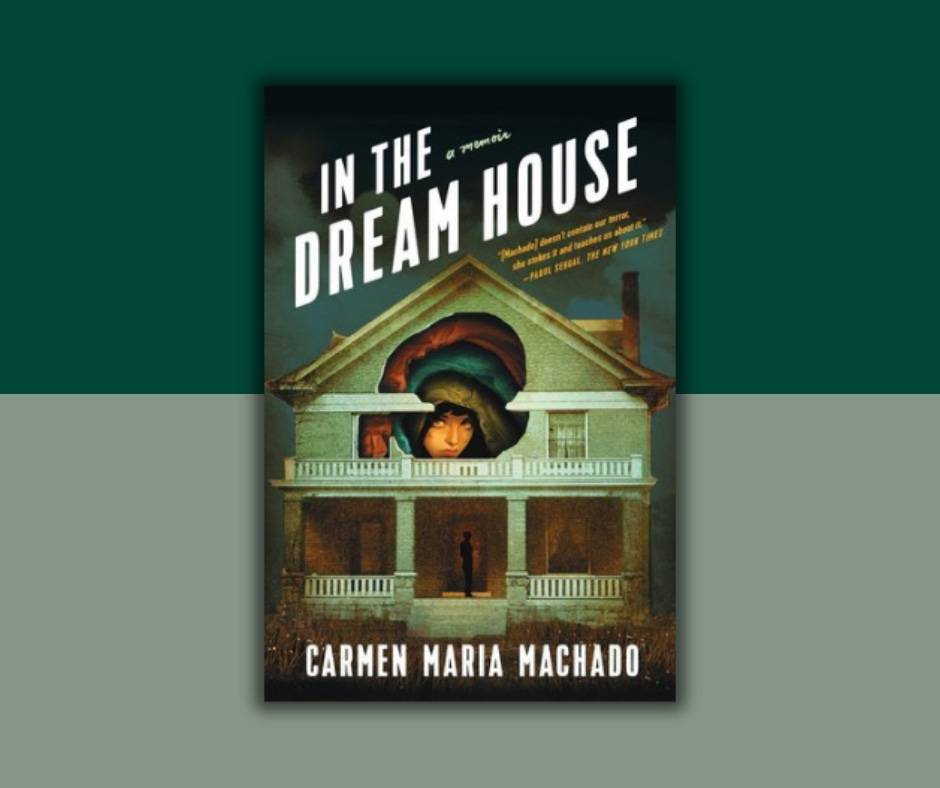
Carmen Maria Machado’s striking memoir about her time with an abusive girlfriend is wildly creative, engrossing, electric and piercing. I first read this years ago but recently decided to revisit it, this time with the author’s voice in my ear via the audiobook. Machado’s delivery has a poetic cadence and her soft voice holds a dose of childlike innocence which, paired with the content, made this that much darker of an experience.
Machado lived on and off in ‘The Dream House’ during the abusive relationship and so uses ‘architecture as metaphor’ as she takes us through her story. She touches on her time growing up in the church and the effect that purity culture and an inappropriately close youth pastor had on her developing sense of self before introducing us to ‘The Woman in The Dream House’ which is the only name given for this person. Machado writes this in second person (addressed to ‘you’) as she relays her tale to a version of herself. A powerful choice that I interpreted as a means of separating the author from the protagonist to view events from a place of narrative remove as she inserted wider context and worked towards understanding and care. This imparted a fable-like quality to the story that I found strengthened its emotional effect.
Exquisitely written and dripping with a rich, almost harsh vulnerability this is poignant, sharp, punchy, spare and always, always soaked in feeling. It contains some Gothic elements— a house that holds more than just four walls and a protagonist that questions their sanity though a gradual entrapment. Each chapter is fairly short, from just a line to just a few pages, and begins with “Dream House as _____” with the blank being various narrative devices, tropes and themes like:
Metaphor
Not metaphor
Inciting incident
Memory Palace
Omen
Set design
Subjunctive
Haunted Mansion
Myth
Talisman
Choose your Own Adventure
Natural Disaster
Nightmare on Elm Street
Cosmic Horror
Epilogue
Machado uses these broad ideas as tools to make sense of and communicate her own deeply personal experience. It is a little difficult to describe, but trust me that the author’s skill, creativity, openness and narrative all work together to make this an indelible reading2 experience.
Dream House as Haunted Mansion
And then it occurs to you one day, standing in the living room, that you are this house’s ghost. You are the one wandering from room to room with no purpose, gaping at the moving boxes that are never unpacked, never certain what you’re supposed to do. After all you don’t need to die to leave a mark of psychic pain. If anyone is living in the dream house now, he or she might be seeing the echo of you.





what hungry home themed books would you add to this shelf?
have you experienced a haunted or hungry house?
don’t tell me! but also
me and my younger sister M
or listening
For me, The Shining, by Stephen King, is a terrific example of a house (a resort hotel being lived in on the off season) as the perfect example of what you have brilliantly termed the "hungry home."
Although I generally love Sarah Gailey, I had a hard time with JUST LIKE HOME because of the toxic mother-daughter relationship. I had a similar reaction to Gillian Flynn's SHARP OBJECTS, so I think this is just a personal thing.
IN THE DREAM HOUSE is in my TBR - I will get to it someday!