

stage fright
the show must go on
for the best reading experience click the post’s title above to open in a new page which allows you to hover over the numbered footnotes to read them alongside the text. its one click. JUST DO IT.
Did you know I do more than read and tell you what to read? I also edit podcasts and fiction. If you’ve got an audio project that needs a skilled ear or a fiction manuscript that needs a detailed eye, send me a message, or leave me a comment.
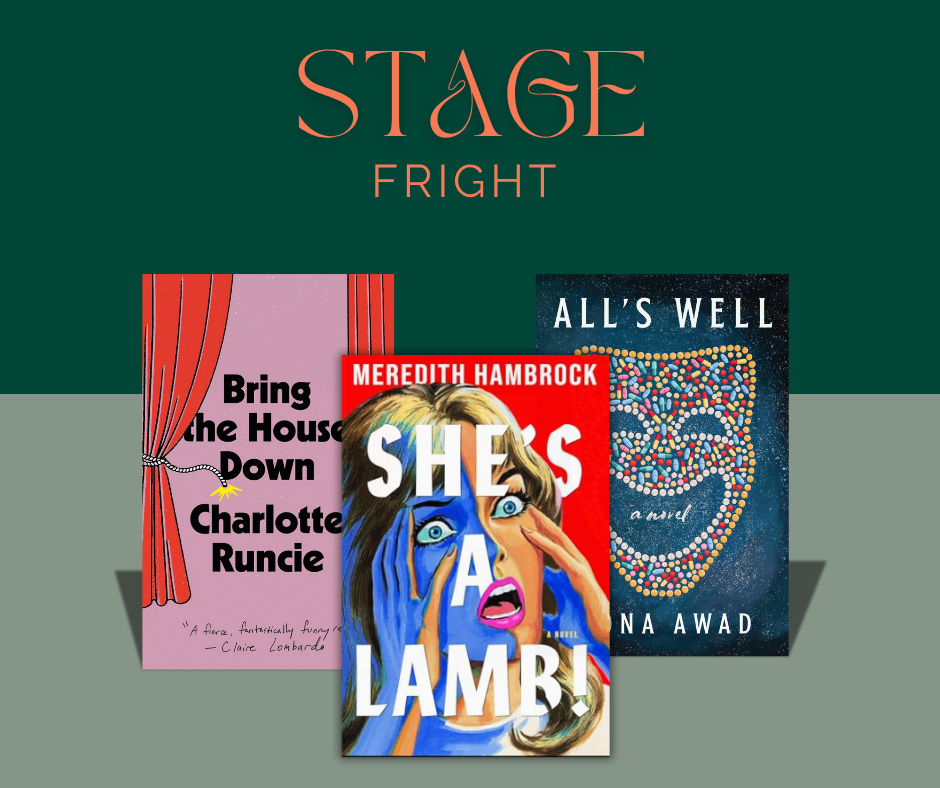
When my brother was like 5 years old his favorite activity was wielding a mop handle as he jousted down the hallway, wearing a Dash costume and singing “the phannnntommmm of the operaaaa is hereeeeee… insideeee your mindddddd”. Even at this young age he knew the lure of the stage, how it could inspire, haunt and possess. Or, maybe he just sang what his four sisters forced him to watch1. I’m not sure.
For spooky season I wanted to highlight a few books that take place on the stage as it is an ideal setting for ambition to morph into madness. Theater is where the lines between performer and performance, tragedy and comedy blur and where shadowy alcoves can hide ghosts of dramas past. Today’s shelf contains books about a critic becoming part of the show, an aggressively ambitious actress gone wild and a woman desperate to change her fate even though it may doom someone else.
Turn down the lights, pull back the curtain and prepare to go off book with one of these.
BRING THE HOUSE DOWN by Charlotte Runcie
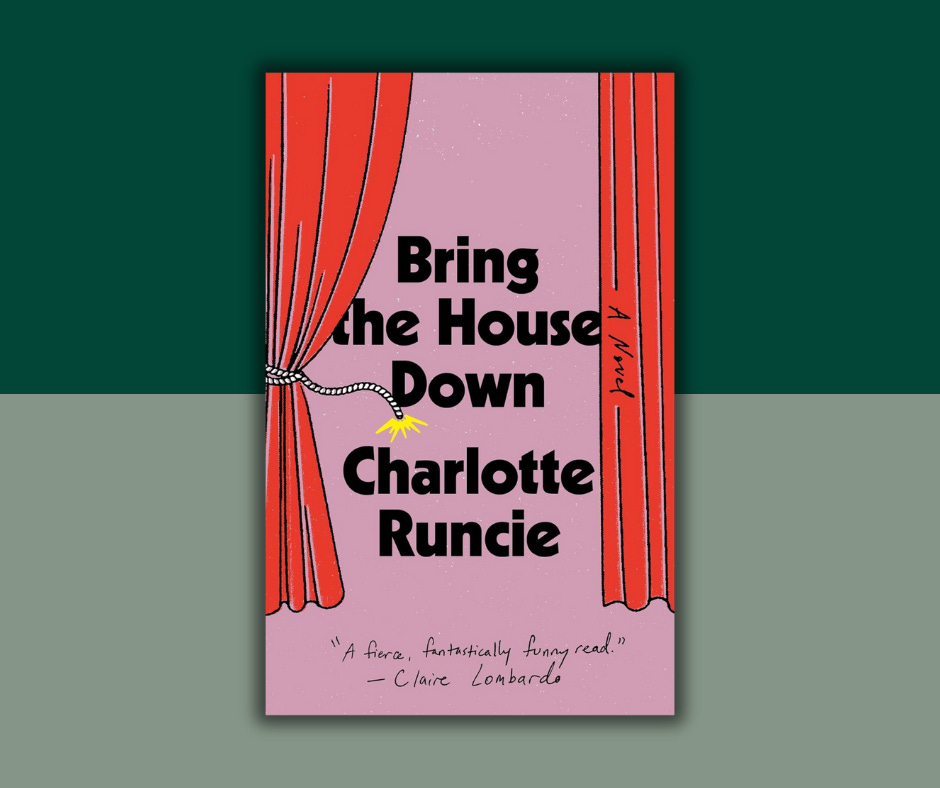
After theater critic Alex Lyons sleeps with the actress of a one woman show and she wakes up to read his vicious pan of her performance, he becomes part of the act when she re-creates her show to be about the experience. Over the four weeks of the Edinburgh Fringe Festival2 Sophie, a writer colleague and Alex’s festival roommate, gets a front row seat to the way art can frame narratives, inform cultural discourse and affect real lives. As she becomes an unwilling confidant to Alex, she begins to reckon with her own history of playing the roles of artist, viewer, critic, mother, wife and woman.
One of my favorites of the year so far, I throughly enjoyed this one. I went into this expecting something a fluffy with a sprinkling of shock value and a beat or two of thoughtful commentary but I got something richer. It is narrated by neither the womanizer nor the actress involved in the main event, but by a (not really neutral) third party which was a really interesting direction. It was odd yet compelling that Sophie sometimes sounded like an omniscient narrator though she wasn’t present at the main crux of events. But she’s an involved character, stepping more into the role of protagonist as the plot progresses. The first chapter has a terrifically foreboding ending as the reader witnesses Alex’s choice to fuck the actress Haley physically while the review is printed to fuck her artistically.
This deals with so many interesting themes while still being rooted in the personal. Sophie and Alex both have deep love for performances— the tactile, interactive nature of watching a live show with its buzzy build-up, ripped tickets and wrinkled playbills, the heat of the lights and the hush of the crowd, all of it magic. “Stage performance is the only storytelling art form created in the present tense”. They both hold different points of view on criticism, its role in consumption and their role in its creation. I really enjoyed all of the squishy, complicated ideas around the interplay between the roles of art, artist, critic and consumer. Alex is an asshole but, as Sophie questions why she is still drawn to him, we learn his layers, backstory and he becomes a more fully fleshed out character than a mustache twirling villain.3
This is full of zingy, poignant observations of character, culture and art and I adored all the inclusions of the very weird, imaginative and off beat acts that populate the festival. There’s some light gothic elements here— an ornate apartment that feels claustrophobic and haunted by the past along with the climax which I won’t spoil here4. Sophie’s character is suffering through her own existential crisis as a mother newly without her own mother and grappling with an ever evolving relationship between herself, her career, body and identity. I was captured by all the messy human complications, growth5 and self-reflection going on here and its challenging of the constantly re-packaged cycle of content that gets served up to an ever ravenous, never satiated court of public opinion. There’s so much to think on here and it didn’t feel preachy or unfairly weighted and I appreciated the honest, vulnerable emotional excavation about identity, storytelling, performance vs reality, public shaming, ‘good guy vs bad guy’ narratives, cancel culture and individual ownership of events. This is smart, fascinating, timely and funny and don’t miss its lovely acknowledgments section.
His mother smelled like a shimmer of flower petals and slightly of whisky. She squeezed his hand and he squeezed hers. The curtain drew back, and the stage lights came up, and there were people up there, real grown-ups, confident and loud and alive, with snow falling on the stage as they pretended to be anything other than who or what they really were. There was nothing between him and the actors. They could touch him if they wanted, and he would let them. All they wanted in return was his applause. This meant they wanted his love. (It was only much later that he would realise he had the power to keep his love from them.)
He didn’t remember much about the show itself, as an adult. He only remembered, as he told me when everything was falling apart, the moment when his mother’s world became his world, too. The fear and wonder of it. He remembered the applause, and how it connected the audience and the performers in a sacred pact of pleasure.
He remembered it every time he reviewed a show.
SHE’S A LAMB! by Meredith Hambrock
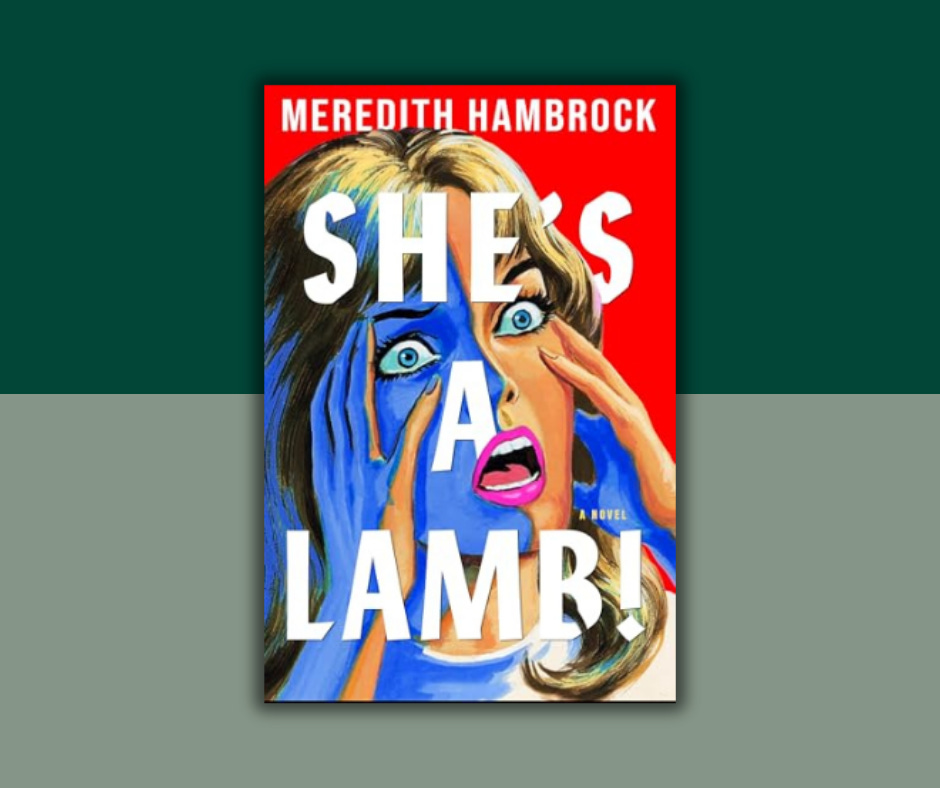
Jessamyn, a 26 year old self-described beauty, works as an usher at Vancouver’s local theater and is sick and tired of waiting to be discovered. When The Sound of Music is announced and her bitterest rival cast as Maria, she accepts a job babysitting the child actors so she can step in when it all inevitably goes to shit. But with opening night drawing closer and the director refusing to re-cast Maria, Jessamyn decides it may be time to take her fate of stardom into her own hands.
This was a ride. And what a cover! A satire that follows a delusional narcissist taking her ambition to eleven6 may not be for everyone but it was for me. We’re thrown immediately into Jessamyn’s highly singular and disturbed psyche as she refuses to accept her reality or lack of skill. She’s often out of her mind, retreating into flights of fancy where she imagines highly improbable futures or exceptionally detailed modes of murdering her enemies while clinging to her ever dwindling chances of becoming a musical theater actress.
What I found most interesting was her why7— why she insists upon musicals when she actually has real talent for ‘serious’ acting8, why she needs adulation and applause and why she sinks all her income into private lessons. Jessamyn has an astronomical sense of superiority but also nurses a deep fear and hides a secret past. I felt so much for her— amusement, pity, revulsion, confusion, frustration — as she craved the love, care and security of an audience and battled her nemesis who was honestly pretty similar to herself. This has a little bit of a Black Swan-like descent into madness which was unsettling, creepy and oh so delicious.
I think it got a little draggy around the 200 page mark but eventually picked back up and catapulted towards a truly insane ending, that of course takes place onstage. Its uniquely diabolical, conniving voice dripping with cutting condescension was thrilling and shocking but I appreciated that this also included a thoughtful backstory that built out Jessamyn’s character so she wasn’t completely cartoonish. Drama, mystery, suspense, dark humor, violence and madness all swirl around the stage and this tackles themes of the necessity of ego, desperation and loss of identity for creative expression along with how the potential for acceptance, applause and adoration from a fickle audience can result in a constant, haunted yearning.
Neither of them moves. I’m excited; it’s my time to step into the part. These jerks are going to storm off and fluff their egos, and here I am, ready and willing to be shaped by Michelle’s directorial vision, because, as a true star. I have no sense of myself. I let others flow through me. Like really warm, sexy water. Undulating. Available. Open for business.
The reasonable hero is a perfect role for me. I’m already running through the lines in my head, ones I’ve memorized while working this scene with the kids. I put my shoulders back and step forward, about to volunteer when the Captain speaks.
His quiet voice slices the silence wide open, penetrating my heart.
ALL’S WELL by Mona Awad
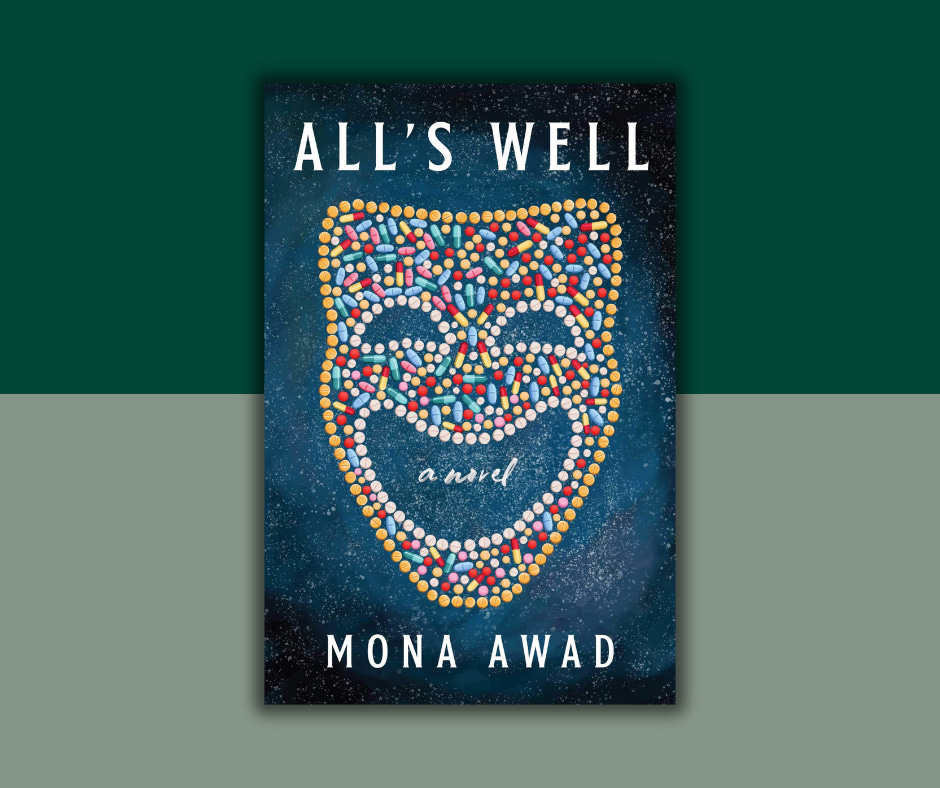
Miranda9 used to be a star of the stage until a tragic accident left her in constant pain. Now a divorced college drama teacher, she can’t get through her days without being heavily medicated and when her students reject her plan to put on All’s Well That Ends Well, in favor of the more edgy Macbeth, something inside her snaps. Late one night she encounters three enigmatic gentlemen, ‘The Weird Brethren’, who help her see that a very different sort of future may be within her grasp if only she’d reach out and claim it.
I loved all the Shakespeare play here, with Miranda inhabiting a variety of different characters as she goes through her arc. Is she Macbeth? Or is she Lady Macbeth or perhaps Helen or even The King? She is all and none of these at once as Awad whisks us through a modern fairy tale complete with witches, ghosts, madness and other classic spooky, Shakespeary tropes. The Weird Brethren10 in particular were just right, freaky and unsettling.
This is witty, snarky and had a few murky, mystical elements to keep the reader guessing and went to some bizarre, absurd and frightening places. Miranda has our pity and our horror as she justifies her choices within a world that has abused, neglected and mocked her. I felt more care for her character than Jessamyn from above as her troubles were more rooted in reality and tragic circumstances— trapped as she was by invisible chronic pain, disbelieving friends and an unhelpful medical establishment. I often found her relatable and was oddly charmed by her endlessly dreary, blunt internal monologue so even when she started to spiral I could not look away nor help myself from cheering her on just a little bit.
It felt maybe 30 pages too long but got speedy and almost manic after the halfway point when things really started going nuts. I loved the nightmarish ‘what’s real and what’s not’ elements that are ideal for a book about performance, theater and ambition and its visuals often read cinematic. It has a delectably dreamy and theatrical final act which, one could argue, included a ‘descent into lightness’ aspect that felt new and surprising. I appreciated the lines that described and prescribed reality and when/where actual Shakespearean quotes appeared. A delightfully dark, sharp and visceral read that, like All’s Well that Ends Well,11 is neither fully tragedy nor comedy but somewhere in between.
“I do affect a sorrow indeed, but I have it too,” Ellie says, not reading from the script. Doesn’t need to. She’s been practicing. For this very moment perhaps. I do affect a sorrow indeed, but I have it too. Can I tell you how exactly right she says it? Her voice is wavering on the surface, but deep and sure beneath. I hear her knowledge of her lowliness. Her pain and her aspirations both. Her love like an impossible star. I hear it all in her voice-deep, soft, fiery. Looking up at stars from the gutter. And then I see the play. I see it all. It comes wonderfully to me. In all its dark lightness, in all its strange fairy-tale splendor, with the sound of Ellie’s voice.
When they’re finished, I clap. I tell them bravo, well done.I clap and clap, they were so good! I tell them next time, we’re going to plunge deeply into Act One. Get ready. I tell them I’m excited. Aren’t they? They stay frozen on the floor. So I tell them they are dismissed. They gather their things, they leave quietly, so quietly. Saying goodbye to me, as they leave. Goodbye, Professor.
the rolling ladder is a weekly ritual that brings you amusement or adds a new book to your nightstand then
read a book! - heart! - share! - comment! - or even buy me a ‘coffee’





have you read any of these?
what spooky, stage set books would you add to this shelf?
do you have any of your own spooky stage stories to share?
we watched the movie version of this a lot even though i think it is quite bad
from week 0 to week 3
though still an asshole
but come on, you can probably guess
or lack of
motivation is key for acting
and negative for singing and dancing
this name comes from the tempest
instead of the weird sisters of course
this is described as a ‘problem’ play because it doesn’t fall neatly into the tragedy or comedy category
Also I recently had a solo drive in which I put on a one-woman show of The Phantom of the Opera in my car. The chokehold that movie had on highschool me required keeping my hand at the level of my eye
I love this theme! Very intriguing picks, and I haven’t heard of any of them. Tis the season for gritty madness, and you delivered