

banned books
"Censorship Is So 1984. Read for Your Rights.”
for the best reading experience click the post’s title above to open in a new page which allows you to hover over the numbered footnotes to read them alongside the text. its one click. JUST DO IT.
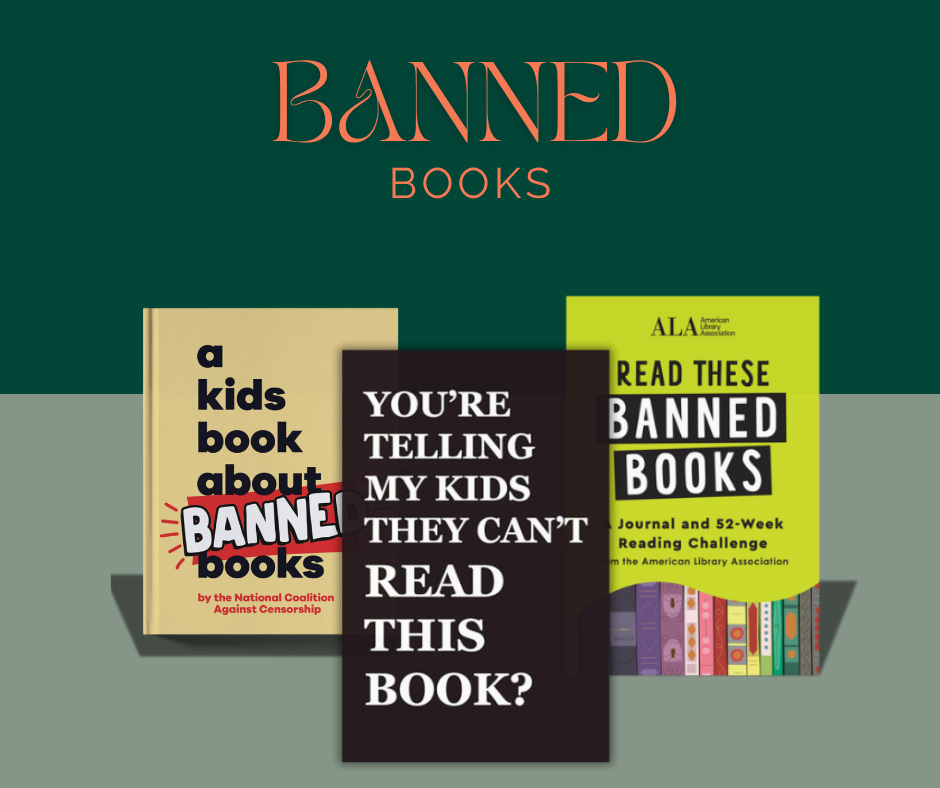
“Happy” Banned Books week! “Censorship Is So 1984. Read for Your Rights.” is the theme1 for this year’s Banned Books Week2 which is this week, 10.5.25-10.11.25.
“Banned Books Week prompts us all to stand up and defend our First Amendment right to read freely,” said Barbara Stripling, Banned Books Week Coalition chair. “Censorship is never the path to truth. All of our lives are enriched when our libraries and schools provide the books that allow us to see ourselves, understand others, and discover the world.”
As we’re all readers here, I’m sure I’m not alone in my feelings of irate bafflement that this is a thing. I mean, banning books from A LIBRARY? from a SCHOOL? What’s next? Should I call a grocery store and demand they remove all mushrooms from their shelves because I personally believe they’re an immoral combination of squeaky, smooshy and snappy!?
I mean, schools and libraries are for ED.U.CATION—for developing intellectual prowess and learning how to engage with ideas thoughtfully, for learning ‘how to think not what to think’3 and wrestling with complicated topics that don’t have easy answers. Fascists and fundamentalists love simple stories with a clear hero (us) and a clear villain (them). The easier for the thought police to arrest you my dear. As depressing as book banning is, I also wonder why they bother banning books when our literacy rate4 is so abysmal. Perhaps this is by design? Why ban books when you can just discourage reading itself? Unimaginable.
Smarter people than me have cleverer things to say about this so I’ve been researching a bit over the last few months and here’s some pertinent information I’ve come across. Maybe you’ll find it interesting too.
The ALA’s Top 10 Most Challenged Books of 2024 mentions that “The most common justifications for censorship provided by complainants were false claims of illegal obscenity for minors; inclusion of LGBTQIA+ characters or themes; and covering topics of race, racism, equity, and social justice.”
There’s a Great Courses online tutorial on Banned Books, Burned Books: Forbidden Literary Works which teaches the long sordid history of censorship.
PEN America has documented nearly 23,000 book bans in public schools nationwide since 2021, a number never before seen in the life of any living American. Florida leads the pack followed by Texas and Tennessee. Sarah J. Maas of ACOTAR fame was the third most frequently banned author of the 2024-25 school year. Fascinating no?
The Free Speech Project Can It Happen Here? – The Return of Book-Banning and Burning in the United States lists all sorts of depressing stories about book banning AND BURNING!?! from recent years.
From an April 2025 NYT article Who’s In and Who’s Out at the Naval Academy’s Library? An order by Defense Secretary Pete Hegseth’s office resulted in a purge of books critical of racism but preserved volumes defending white power.
Gone is “I Know Why the Caged Bird Sings,” Maya Angelou’s transformative best-selling 1970 memoir chronicling her struggles with racism and trauma.
Two copies of “Mein Kampf” by Adolf Hitler are still on the shelves.
Gone is “Memorializing the Holocaust,” Janet Jacobs’s 2010 examination of how female victims of the Holocaust have been portrayed and remembered.
“The Camp of the Saints” by Jean Raspail is still on the shelves. The 1973 novel, which envisions a takeover of the Western world by immigrants from developing countries, has been embraced by white supremacists and promoted by Stephen Miller, a senior White House adviser.
“The Bell Curve,” which argues that Black men and women are genetically less intelligent than white people, is still there. But a critique of the book was pulled.
“Book banning can be a canary in a coal mine and could predict a stifling of free speech and thought,” he added. “Books that challenge us make us stronger. We need officers who are educated, not indoctrinated.”
From Military.com Here Are the 596 Books Being Banned by Defense Department Schools
Military Families for Free Expression, a group formed earlier this year to push back against Defense Department book bans, decried DoDEA’s book removals.
“This list reflects a sweeping effort to silence voices, particularly those centering on Black, brown and LGBTQ+ experiences,” Libby Jamison, the group’s spokesperson, said in an emailed statement. “These bans aren’t about protecting children; they’re about restricting what young people are allowed to know, feel and question.”
Books Unbanned 5was founded by the Brooklyn Public Library in 2022, helps get banned books in the hands of youth who need them. I’m proud that Seattle Public Library is one of their partners! To hear kids share in their own words the effect bans have had and how this organization has helped them, read In Their Own Words: Youth Voices on Books Unbanned.
I am severely visually impaired and can’t read physical book copies. Having a wide selection of audiobooks and accessible ebooks helps me access the same amount of literature as my sighted peers.” —Age 15, Washington
I have been using my library card to access digital books that unfortunately are rarely available in my library. These include books with LGBTQ+ and autistic representation, which has been lifechanging to me as an autistic queer kid.” —Age 19, Florida
As I went through four years of high school, I, witnessed the destruction of our library. We went from a small, but full library, only halved every year until ultimately it was removed due to ‘lack of interest.’ Not only did I lose a vital educational source, but a place of comfort.” —Age 17, Kansas
Did you know there’s an entire class on Censorship for Library Science majors?
From author Sarah Gailey’s speech, Read Like a Criminal, for Ann Arbor District Library’s annual Big Gay Read festival which discusses the “direct relationship between state-inflicted violence and state-governed control of information.”
If you have unlimited access to unlimited narratives and perspectives, you’re at risk of critical thinking. You might start developing your own perspectives on these issues, feeling compassion for people who are labeled “criminal” because they don’t serve the interests of the State–even reconsidering whether or not you agree with the interests of the state to begin with.
If you’re itching to do something helpful this week, consider supporting to an organization I recently started volunteering with, Books for Prisoners, as they’ve got a donor match going on this week. If you aren’t local to Seattle, you can buy from online registry lists and learn more here. I’ve learned that prisons have many restrictions6 about what books inmates can access and that their libraries are pitiful.
Today’s shelf contains books about book banning written by ardent lovers and defenders of the written word— a passionate bookseller and grandparent, a coalition working against censorship and the American Library Association.
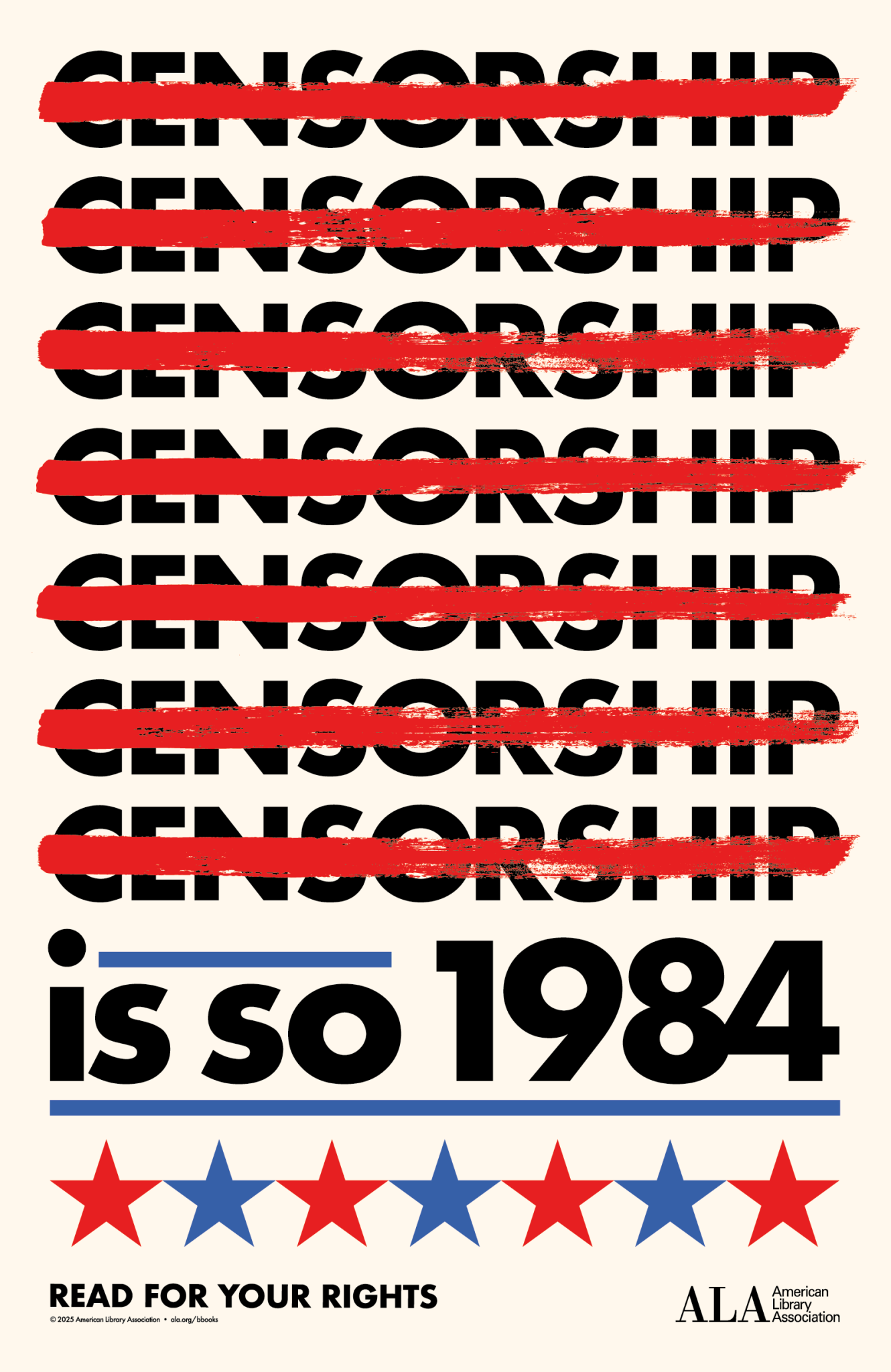
So read whatever the fuck you want and learn more about the insidious idiocy of book banning with one of these.
A KIDS BOOK ABOUT BANNED BOOKS by the National Coalition Against Censorship
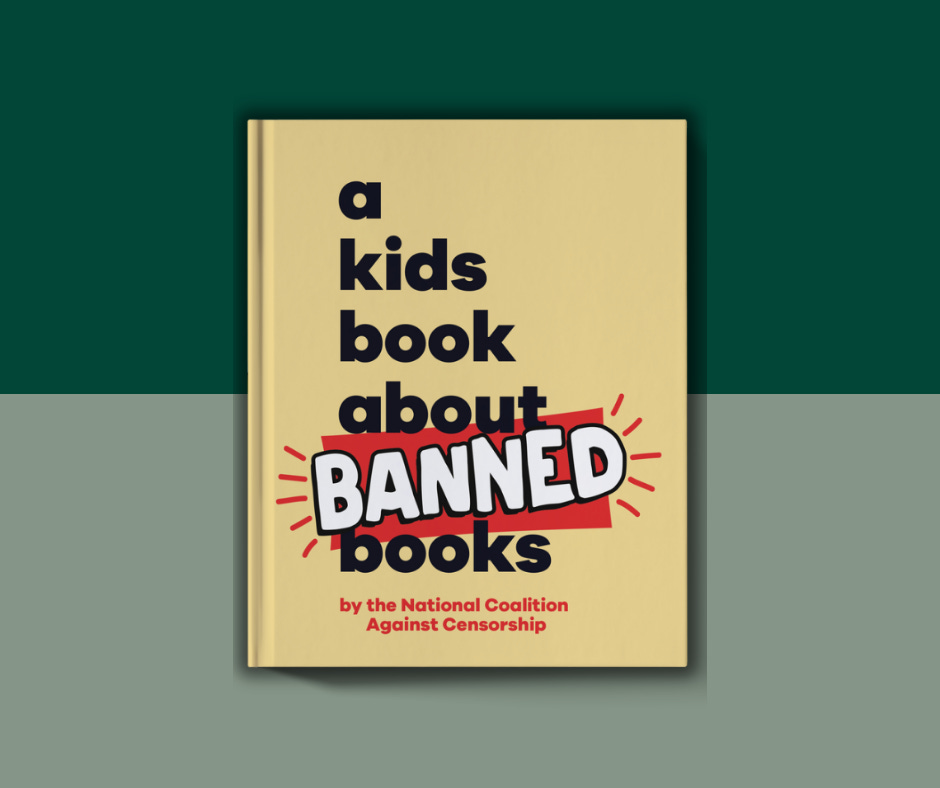
Just as the title states, this is a book directed at kids to enlighten them about the deeply upsetting concept of book banning. It begins with a note explaining that it is best read together with a grown up to foster discussion and is dedicated to “Every reader who has found a friend in a book. And for the brave students, writers, teachers and librarians who fight to make sure all kids can read books that matter to them.” Then there’s a quick note about the National Coalition Against Censorship’s belief in a kid’s right right to read what they want and how individual parental determination should not dictate what all kids get to ‘read, know and believe’ because books spark some essentials of the human experience— curiosity, conversation, learning and empathy.
I appreciated that this basic, direct message to kids exists. With a simple font forward layout and minimal color scheme the book asks young readers to think about why they enjoy reading, the power books can have7, how they build up empathy muscles and then it discusses what a book ban is and what it isn’t. It lays out how important it is that one person’s views shouldn’t change what schools and libraries stock for everyone else then shares a light explanation of why people try to ban books8, who it hurts9 and why it’s harmful to censor ideas10. It ends with a powerful message on how vital it is to learn about ideas you don’t agree with and to practice conversations in order to develop healthy ways to disagree11 and the actions kids can take12 if a book is being banned in their school or library.
Book banning is as old as book reading. Not everyone agrees on what kids should learn and when they should read books with certain themes. At the National Coalition Against Censorship, a big part of our work has been to protect free expression, which is both a basic human right and a keystone of democracy.
…
Not every book is right for every kid, or right for every kid right now. And that really is OK. Parents and caregivers can ask for other school readings and limit what their kids are able to check out from the library. But no one person should get to decide what all kids can read based on their own personal opinions and beliefs.
Did you know I do more than read and tell you what to read? I also edit podcasts and fiction. If you’ve got an audio project that needs a skilled ear or a fiction manuscript that needs a detailed eye, send me a message, or leave me a comment.
YOU’RE TELLING MY KIDS THEY CAN’T READ THIS BOOK? by Andrew Laties
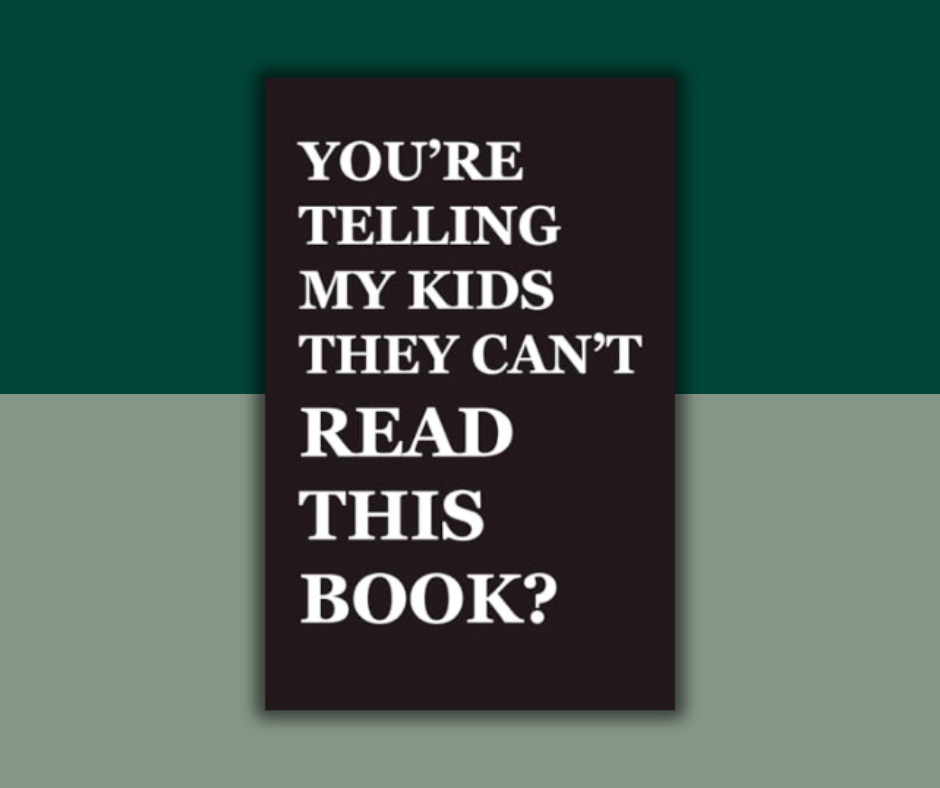
A quick read, this is written by a bookstore owner with decades of experience on this topic and an author himself13. Laties opens this with an anecdote about babysitting his grandchild and the refuge that a library can be and then goes into anecdotes, arguments and history about book bans. While not especially dynamically written, it is full of fascinating information, stories of heroes and organizations on the front lines of this fight and serves as a sort of an educational handbook for understanding and action. I learned all sorts of things here, about Eric Carle’s Blue Horse and the making (and banning!?) of American Girl Doll14 books, how providing content for underserved populations is actually profitable and the necessary role of independent bookstores in this current culture of censorship.
Valerie Tripp and Pleasant Rowland had developed an agenda of their own: they wanted to get girls interested in history. Pleasant had the inspiration to launch an upscale historical-doll company that would publish a series of books telling each doll’s story. The plan was to pick transformative moments in history and develop thematically matching character-arcs. The American Girls would have personal agency and make hard decisions, so the history lessons would feel personal. For Valerie and Pleasant to bet on girl-centered historical fiction, in the early 1980’s, was audacious. In children’s publishing there was a rule-of-thumb: boys won’t read books about girls, but girls will read books about boys. So, the need to maximize profit meant every book should star a boy.
Between its 1985 founding and its sale to the Mattel toy company in 2003 for $700 million, American Girl became wildly successful, selling millions of books and roundly disproving the “boy star” rule.
…
…neither Valerie Tripp nor I could have anticipated that a dozen years in our future American Girl books would face parent challenges in Virginia schools and libraries, and that many American Girl books would be banned from schools in Florida. According to a 2023 blogpost on the American Girl website,
“A lot of books dealing with historical and social issues are being banned from Florida schools. These, according to sources from teachers on Twitter and TikTok, include the American Girl historical series with the exception of Felicity and Molly. These bans run the gamut from discussions of slavery in Addy’s books to even discussions of anti-Italian xenophobia and polio in Maryellen’s books.”
The American Girl heroines’ change-oriented engagement with the injustices of their eras had become too progressive for book-banning parents of the 2020’s.
This is organized around the various populations in this fight: Publisher’s Fight, Educator’s Fight, Author’s Fight then Librarians, Parents, Students and Booksellers. I loved learning about different organizations and awards around kid’s literature like Children’s Reading Round Table and The Center for Children’s Books in Chicago and appreciated how the author connected his personal experiences with the broader issues at large and the ways to combat banning. I ended the book overwhelmed with anger and gratitude.
This month, as I write—May 2025—the Librarian of Congress, Dr. Carla Hayden, has been fired by the president. One of her offenses, according to the White House, was, “putting inappropriate books in the Library for children.” However, by law, every copyrighted book must be collected by the Library of Congress: from Sambo to Tango. The absurdity of this throwaway explanation for firing the first Black female Librarian of Congress-in the ninth year of her congressionally approved ten-year term-shows that the moral-panic rationale for book-banning is a thinly veiled excuse for racist bullying as a form of popular entertainment, playing to the base: a minstrel tiger prancing in stolen clothes.
…
Roger Sutton: “Libraries present people with the world, basically. All kinds of crazy ideas and smart ideas and ideas I agree with and ideas I loathe.”
Carla Hayden: “Ideas that worked and didn’t work. Ideas from a long time ago, new ideas, all of that. And you get to decide. You get to pick. Think of the freedom that gives you, that you can pick what you want to read.
That’s the essence of the whole thing.”
the rolling ladder is a weekly ritual that brings you amusement or adds a new book to your nightstand then
read a book! - heart! - share! - comment! - or even buy me a ‘coffee’
READ THESE BANNED BOOKS by the American Library Association
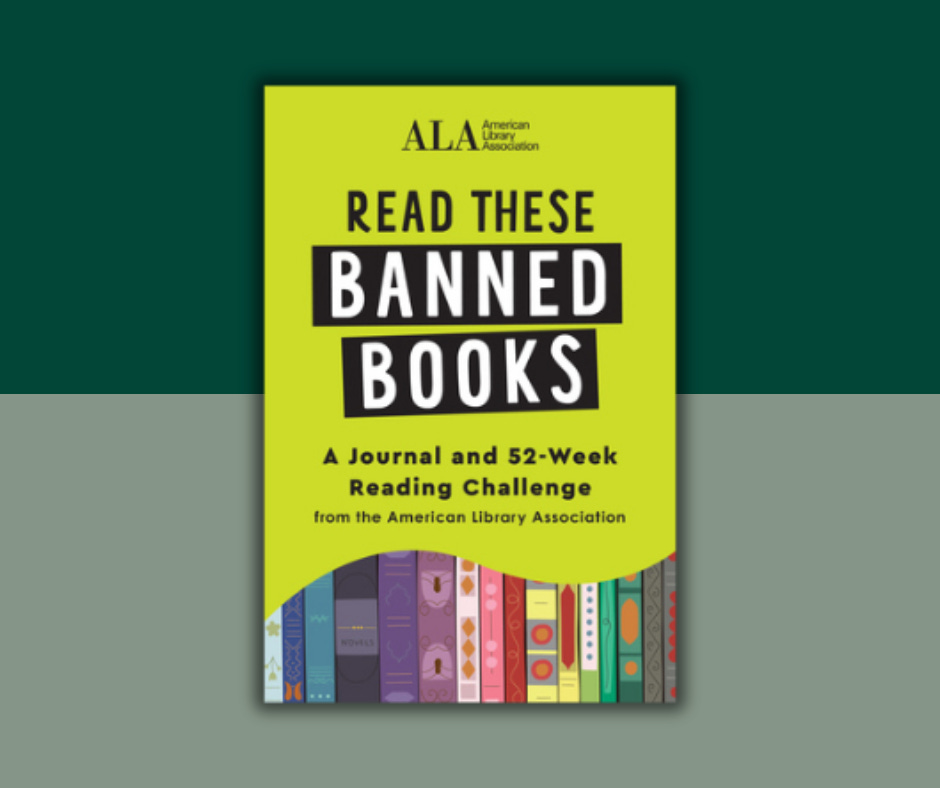
This is a year long activity book that highlights 52 books that have ‘been challenged or banned as documented by the American Library Association’ so we can ‘revel in unrestricted reading’. 15 Each book has a short description and then a journaling prompt to encourage independent thought, because reading sparks ideas, questions and conversation. At the beginning it lists out the documented reasons why each book was challenged or banned as tracked by the ALA’s Office for Intellectual Freedom. These reasons include: profanity, sexual references, immoral, inclusion of rape, political viewpoint, racism, conflicting with a religious viewpoint, atheism, ‘was thought to lead to terrorism’, condones public displays of affection, ‘too much of a sensitive matter right now’, unsuited to age group and ‘considered to be teaching anti-racism’16. yuP. What DO these people think books should be about!? While I very much appreciated knowing these reasons, I do wish they were included on each book’s page instead of listed all at once in the beginning. This is information that I think is helpful as the reader is being introduced to each book and mulling over it.
Some of the books in this year long challenge include: The Absolutely True Diary of a Part-Time Indian, Speak, I Know Why the Caged Bird Sings, The Handmaid’s Tale, Revolutionary Voices: A Multicultural Queer Youth Anthology, The Hunger Games, Extremely Loud and Incredibly Close, The 1619 Project: A New Origin Story, All Boys Aren’t Blue, The Golden Compass, Stamped: Racism, Antiracism and You, Eleanor & Park, The Hate U Give, The Color Purple, The Glass Castle and Front Desk. Have you, or your kids, read any of these? This book ends with an appendix of the 100 most banned and challenged books from 2010-2019 to inspire even more revelatory reading.
Banning books is a threat to freedom of speech and freedom of choice; reading banned books is an opportunity to stand up for these freedoms.




what is your experience with book banning?
any favorite banned books?
which books about banning would you add to this shelf?
the annual theme is decided by Banned Books Coalition and the American Library Association
a slogan of my evangelical christian high school that i don’t think they realllllay followed though they probably think they did.
On average, 79% of U.S. adults nationwide are literate in 2024.
21% of adults in the US are illiterate in 2024.
54% of adults have a literacy below a 6th-grade level (20% are below 5th-grade level).
Low levels of literacy costs the US up to 2.2 trillion per year.
The US ranks 36th in literacy.
to support the rights of teens nationwide to read what they like, form their own opinions, and work together with peers across the nation to defend and expand the freedom to read.
With over two million Americans incarcerated, the book-restriction regulations within the United States carceral system represent the largest book ban policy in the United States. Often the ultimate decision-maker about a person’s right to read is housed in the prison mailroom. Research clearly indicates that access to literature reduces recidivism and better prepares individuals to thrive when they return to free society. Meaningful access to literature is essential for incarcerated people, where the written word is a rare source of information, education, and recreation, and a window to the wider world.
‘to learn, discover, explore, feel and for fun’
fear, control
everyone
‘hiding things we don’t like doesn’t make them go away’
now, if only the ‘adults’ in power had those
read!
this phrase reminds me of when my dad forbade me from reading harry potter as a young teen and i did it anyway
uh, what
Ooo I’ll have to grab the kids one to read to the children. I’ve come to a point where I appreciate bans, because they let me know what I should be reading haha Also I wonder if these people realize how explicit the Bible is sometimes.