

cinderella
from rags to riches
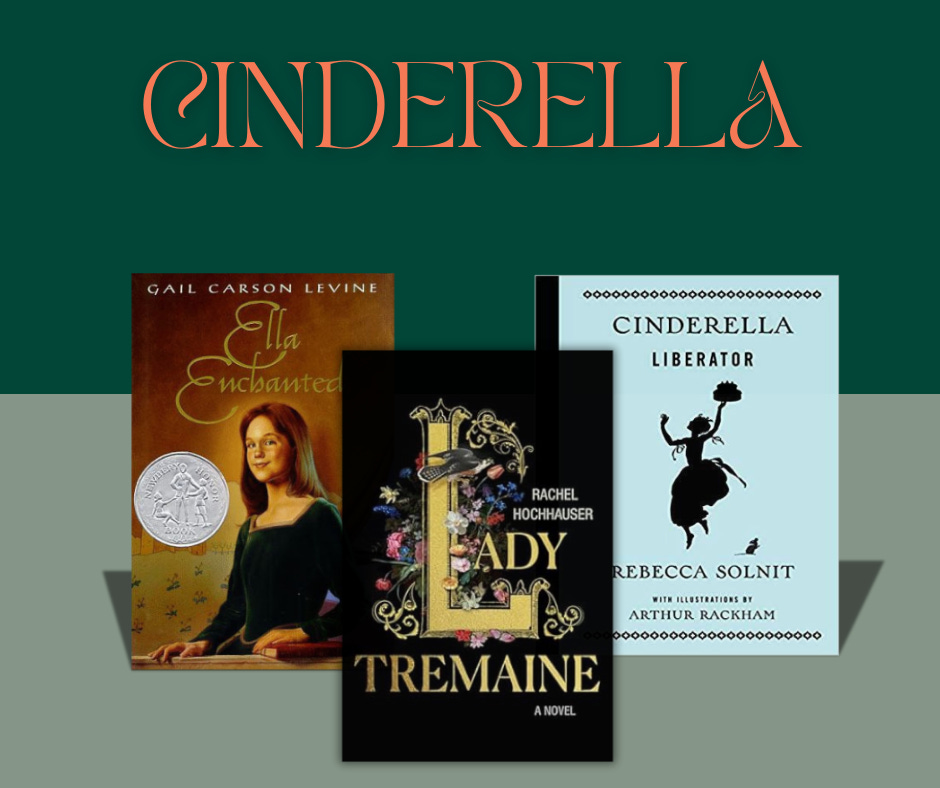
In college I wrote one of my senior papers about the use of the Cinderella narrative in four of Jane Austen’s novels, exploring how their marriage plots used the ‘rags to riches’ trope for their happily ever after endings. It must have been pretty good because I was selected to present it at a conference. However, unlike Austen’s protagonists, the character of Cinderella herself is a bit irritating, don’t you find? In the most common modern iterations, she is usually annoyingly submissive and way too into animals. So, I’ve been curious about her origins and the various versions of this folktale so was delighted to discover an episode of Angourie Rice’s charming and well researched podcast, The Community Library, where I learned all about the ancient Greek and Chinese accounts of the girl with the missing shoe, feeding my interest in the evolution of fairy tales. I find it fascinating to discover which story beats are simliar, which elements veer off the beaten path and what meaning we can derive from those deviations. See The Community Library Podcast 3.7 Cinderella: Glass Ceilings and Slippers for more.
In addition to learning where the tale started, I’m also interested in where it is going next so find fairy tale revisionism thrilling, how something new can be created by revisiting and re-contextualizing typical tropes. The way the basic ingredients of a Cinderella story1 —an abused young girl, an evil parental figure, a magical intervention, a lost shoe and a happily ever after — are used depends on the writer’s focus. These same story details can be written for any age group and explore any number of themes such as the unfairness of inheritance law, family trauma, domestic abuse, class oppression, animal welfare, ableism, the painful burden of women’s fashion and, in the case of the books on today’s shelf, obedience, motherhood and liberation.
So finish sweeping up those cinders and grab your glass slippers as you have a ball with one of these.
Extra Credit: I’ve got this online course bookmarked to take sometime so I can learn more about the universality and differences between fairy tales: How to Read Fairy Tales. Any one else interested?
ELLA ENCHANTED by Gail Carson Levine
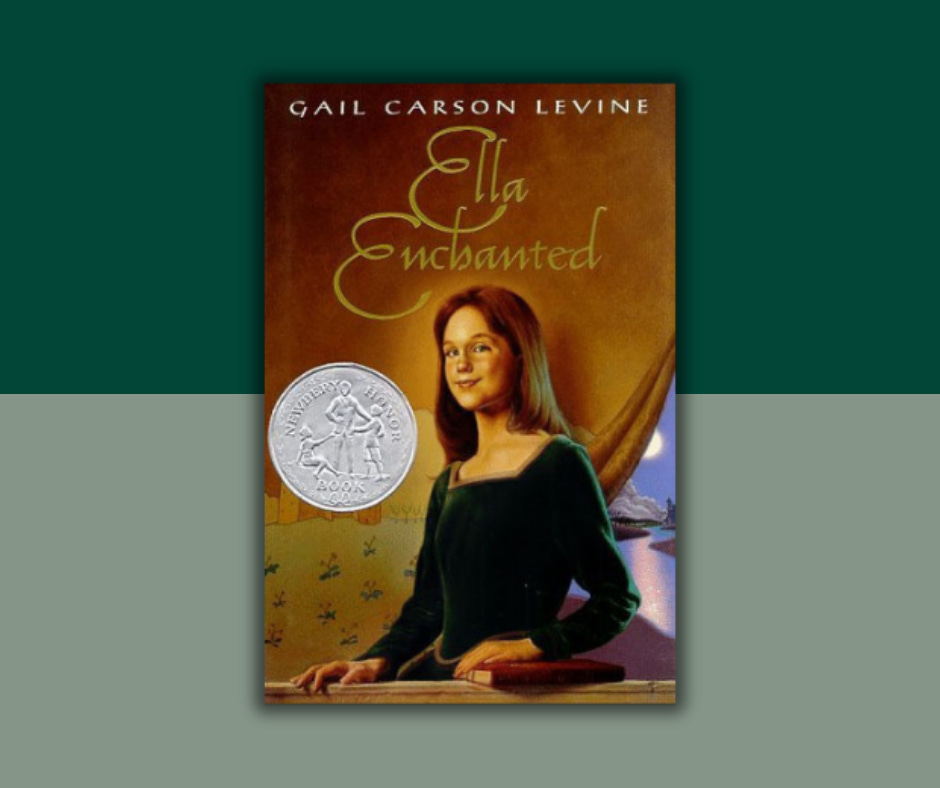
When Ella was born she was given the gift of obedience by a well meaning but silly fairy godmother. Unable to refuse a direct order, she grows up not complacent and submissive but creatively willful under the eye of her vivacious mother. When her mother dies2 and she eventually gains a stepmother and stepsisters, her secret gift becomes a bigger liability than ever so she embarks on journey to free herself of it. As she searches for a way to break the ‘gift’, she encounters a magical world full of elves, ogres, centaurs and, of course, a prince. But when her obedience becomes a tool for nefarious ends, Ella must use all of her courage, cunning and conviction to achieve her happily ever after.
This is my favorite version of Cinderella. I read it as a young teen and again last year, daring to hope it would hold up. Happily, it did! I hadn’t realized that so much of this book imprinted on me so many years ago; the rising horror of Ella’s predicament, her tenacity and ingenuity, the message to ‘not be too obedient’3 and even specific scenes and interactions. While this contains broad beats of the classic Cinderella tale — absent father, domineering stepmother, silly stepsisters, a riches to rags to riches arc, magic, a ball and a prince— it is utterly fresh due to the first person narration of our spunky and shockingly funny protagonist. Ella is dry, smart, curious and empathetic with a talent for languages and a strong sense of right and wrong, making her an ideal character to root for. As she grows up under the shadow of her curse and those who exploit it, she learns to rely on her wits to get her out of sticky situations which develops a sense of creativity, play and identification with the powerless. The only way she has autonomy is through her sly rebellions so as she gets into various scrapes, shenanigans and escapades we’re with her every step of the way. Her adventures range from silly to deadly serious so there is no small amount of suspense and danger even within a tidy, classic fantasy world with a guaranteed happy ending.
Never sentimental or saccharine, this is written in an earnest, clever and lively voice and I found delight on every page. Ella matures believably throughout the story and the build up of the romance, ending and inclusion of fairy tale beats were spot-on, suspenseful and immensely satisfying. This middle grade/young YA tale is one of selfhood, consent, power and empathy and I found it amusing, inspiring and romantic with a strong, hurrah of an ending that made me think of all the ways I’d like to be less obedient in my own life. Note that there are a couple questionable descriptions that didn’t age well4 here and also note that I STRONGLY ADVISE AGAINST watching the movie adaptation which is idiotic and tacky.
That fool of a fairy Lucinda did not intend to lay a curse on me. She meant to bestow a gift. When I cried inconsolably through my first hour of life, my tears were her inspiration. Shaking her head sympathetically at Mother, the fairy touched my nose.
“My gift is obedience. Ella will always be obedient. Now stop crying, child.”
I stopped.
LADY TREMAINE by Rachel Hochhauser
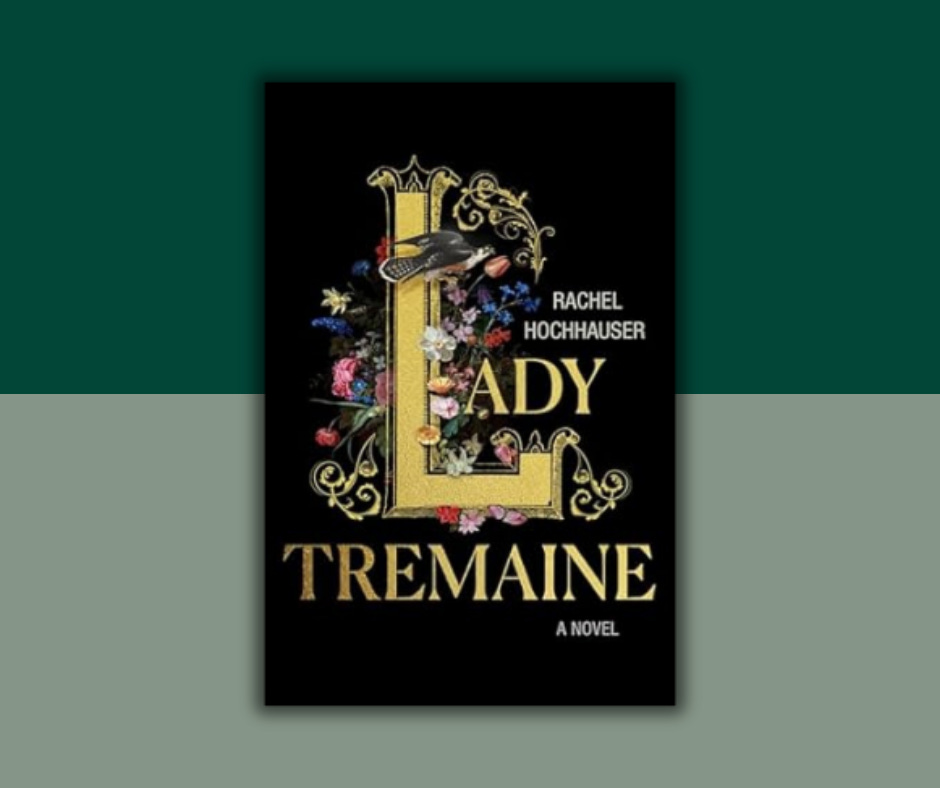
Etheldreda has two dead husbands, three daughters and one dilapidated estate. Keeping up appearances to secure futures for her children has been her entire life’s purpose for decades and the recently announced ball means that all her work may finally reap royal rewards. Though Ethel/Lady Tremaine would much rather be hunting in the woods with her trusty falcon, she must use all her wits, social training and motherly resourcefulness to ensure all her children, even her vexing stepdaughter, have a chance at a becoming a princess. But when she discovers the true price of gaining a crown, Ethel must decide what safety and care really look like.
This is told from the ‘wicked’ stepmother’s perspective which means we’re free to be more judgy than usual to the Cinderella character which I found to be great fun. While Lady Tremaine/Ethel is practical, ambitious and conniving her stepdaughter Elin is spoiled, dreamy and avoidant. She is full of platitudes instead of pluck which makes it easy to switch allegiances to the stepmother who has a deep and active love for all her children, even if it is colored by frustration. This is well written and had an interesting approach, adding context, motivation and clever little twists to the well known tale which made it emotionally relatable. I appreciated its commentary on the roles women are stuffed into under a patriarchy— when minimizing self and obeisance will not save you, what will? I love a fairy tale remix and here our heroine is the traditional villainess and the antagonist is… well I’ll let you read it yourself to find out.5 Though this is a bit too long and I wished Ethel was allowed to be more cutthroat, this had an exciting mother focused narrative and I appreciated its embrace of emotion and intellect6.
…nature was a system, not a nurturer. For every life, there was death, for every bit of laughter, there were tears. For every anguish, there was joy. For the broken bones and crushed eggshells, there were small miracles. For the predators, there was prey. For the herbivores, there were plants, and for the carnivores, there was meat, and every meal for every being caused some other living thing harm. Nature was balance.
The only being that defied the ancient standard-the standard of me, first, me, only, I, l, me-was a mother. A mother, in the bone of her bones, was not in balance. She gave, without ending. She thought not as an I but as a we and more often it was you, you, you, my darling, you. A mother protects, tipping scales, weighing odds, defying the system.
in addition to telling you what to read, i also edit podcasts and fiction. got a project?
CINDERELLA LIBERATOR by Rebecca Solnit
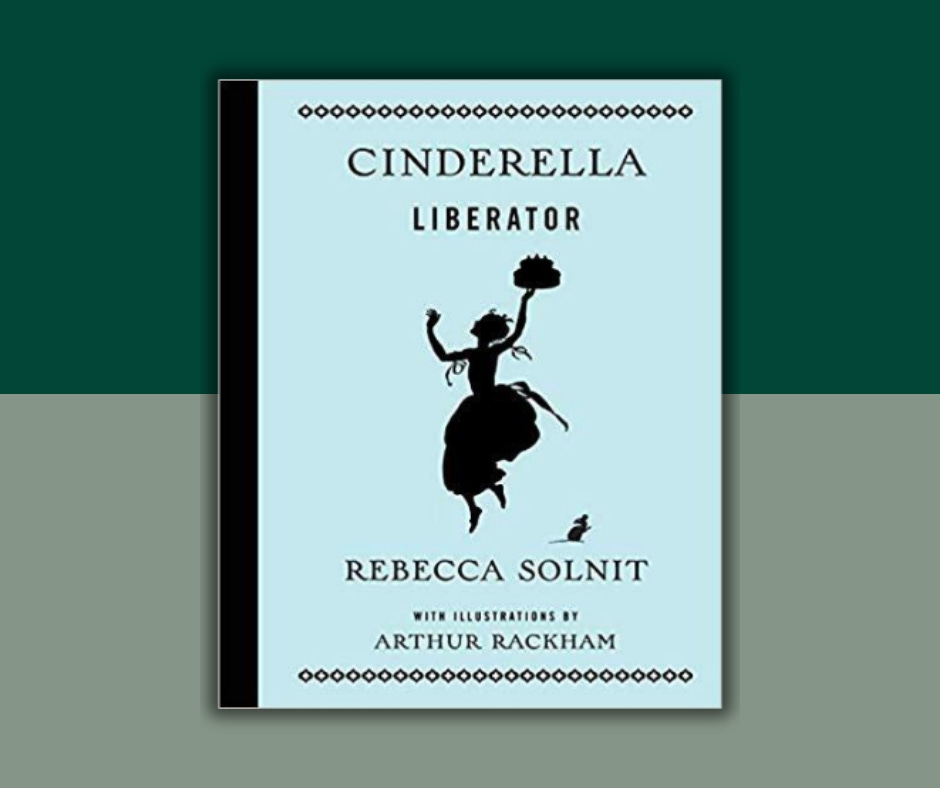
Cinderella ‘Ella’ is overworked and overlooked by her stepmother and stepsisters, though her sprightly, caring attitude helps her to survive it. Though a fairy godmother helps her get to a ball and catch the eye of a prince, Ella soon realizes her true calling and creates her own happily ever after. One that has less kissing and more cake.
Prolific writer Rebecca Solnit’s twist on the classic children’s fairy tale was written to “preserve something of the charm of transformation and the plight of the child, and how to work out a more palatable exit from her plight than the one we all know.” Solnit uses the basic ingredients of the story and the silhouetted illustrations of Arthur Rackham’s 1919 version to create something unique. In this variation, inspired by her grandmothers’ lives of labor,7 she wanted to focus on the theme of liberation, to “set everyone loose to be their best and freest self.”
There’s little conflict here—no truly evil antagonist—as the ‘bad’ characters are simply misguided, foolish or possess weak internal knowledge and most of them get their own arcs and moments of true attention. Enough that readers will finish the story curious about how the co-star’s tales will play out. I enjoyed the whimsical black and white illustrations occasionally refreshed with pops of bright baby blue and was tickled by the witchy look of the fairy godmother. Cinderella’s character is typical—kind, friendly and capable—but here her beauty and blindly sacrificial nature is exchanged for ambition for herself, empathy for the overlooked and a focus on community for all as she learns the destructive loneliness of insatiable greed. This sweet but weighty story extends beyond the typical ‘happily ever after’ ending to explore themes of scarcity, abundance, play and the universality of the human experience. It is unsubtly feminist, frank and fun and an interesting exercise for someone of Solnit’s caliber to take on. I quite enjoyed it!
After the story ends, Solnit includes a few pages, entitled Cinderella Metamorphosis, to share what drew her to Cinderella’s story.
I was also touched by Rackham’s image of the ragged child at work and thought of unaccompanied minors from Central America and immigrant domestic workers, who are a strong presence where I live, of foster children, and of all the children who live without kindness and security in their everyday lives, all the people who are outsiders even at home, or for whom home is the most dangerous place, or who have no home.
For some reason this approach reminded me of the hundreds of stories we have today of children in ICE Detention.8 See: The Children of Dilley for more.
Solint also shares why including a modern take on Cinderella’s character was important to her
I liked the spirit of this silhouette-girl that Rackham portrayed. Even in rags she is lively, and she labors with alacrity, and runs and frolics wholeheartedly. She is stranded but not defeated. When it came time to write her story for our time, it seemed to me that the solution to overwork and degrading work is not the leisure of a princess, passing off the work to others, but good, meaningful work with dignity and self determination.
and the characters that inspired her to write a fairy tale focused on freedom.
I wanted to set everyone loose to be their best and freest selves. It’s why the book’s title is Cinderella Liberator, a phrase that carries hints of Katniss Everdeen and Imperator Furiosa and the women of Hong Kong action films like House of Flying Daggers and The Heroic Trio, those powerful women who seize control of the means of production and destruction and move through the world like lionesses.
I wrote the story first for Ella9, and then for anyone and everyone who loves the old stories in which mothers become trees and brothers become swans, in which animals hold conversations and girls open their mouths to speak and jewels and pearls spill out, in which magic models the work of transformation we all have to do for ourselves, on ourselves, all the time, and in which the huge tasks life sets us are clear and dramatic.
She looked like a girl who was evening, and an evening that had become a girl. They call some dresses evening gowns, but this dress really was one, with clouds and the first stars coming out and a crescent moon somewhere in there, and a few birds flying across the hem, black and shaped like the letter W, in all that blue. The stars sparkled and the fabric swished when she moved.
“I love this part of my job”, said the fairy godmother and giggled again.
“Oh,” said Cinderella, as she was almost ready to get into the coach in her beautiful dress, “I am still barefoot.”
One more wave of the wand, another giggle, and her dirty bare feet were clean, and she was wearing slippers that, like the coach, were made of deep-blue glass. They were not very comfortable and made a lot of noise when she walked on hard floors or stones, but looked very special indeed.
if you enjoyed this shelf in particular, let me know!
leave a comment, ‘heart’ the post or send me a tip

Thief, Liar, Lady is a fairy tale remix where Cinderella’s big plan is to seduce the prince for a crown with the gleeful help of her stepfamily, until another prince snags her attention and throws the plan into dissarray. I read this back in the day when I was reading more YA fantasy and even then I found it: meh. It didn’t utilize the bones of the Cinderella tale enough in its story so its ‘inspiration’ just felt like a lazy way of getting readers interested enough to open the book.





how do you feel about the cinderella story? what books would you add to this shelf?
remember this?
classic fairy tale shit
I found a signed copy of this in a used bookstore and Levine included the message "Don’t be too obedient!" after her signature. I sent this to my niece S hoping she’ll take this message to heart.
this was published almost 30 years ago
though you can probably guess by the upside down nature of this approach
true rational thought:
The most rational thing we can do (in the real sense of the word) is precisely to be emotional — to feel anger at the injustice done to so many, at the impunity of powerful men, at the lies and tricks they use to keep their control and manipulate the truth.
Because the longer we treat emotions and emotional skills as ‘feminine’ and hence inferior, not complementary to reason, the deeper and deeper we dig ourselves into a hole that really makes no sense at all.

And it’s for my grandmothers, Julia Walsh Allen and Ida Zacharias Solnit, both of whom were mother less girls, neglected, undereducated; neither of whom quite escaped that formative immersion in being un-loved and unvalued; both of whom are long gone, though the repercussions of their devastation linger.
Solnit’s ‘magnificent great-niece’
Ella Enchanted was one of my favorite books growing up! I still have my original copy. I sadly agree the movie adaptation was tacky and disappointing.